A Guide To Finding Campers For Seniors
Camping remains one of the most accessible and rewarding ways for older adults to travel.
And the assumption that a comfortable, senior-friendly camper requires a major financial commitment isn’t accurate once buyers understand what to look for and where to search.The used camper market under $15,000 contains genuinely practical options for adults over 55, but finding them requires knowing which camper types align best with senior needs, which features make the biggest difference in day-to-day comfort, and which buying channels carry the most relevant inventory at accessible prices.
What Makes a Camper Senior-Friendly
The features that matter most for senior campers aren’t always the ones that get the most attention in listing descriptions. Accessibility, comfort, and ease of operation consistently rank above amenity count for older adult buyers — and evaluating a camper through that lens rather than by square footage or feature list leads to better purchasing decisions.
Step-in height is one of the most immediately important factors. Campers with low floor profiles — particularly pop-up tent trailers, A-frame hard-sided pop-ups, and lightweight travel trailers — are significantly easier to enter and exit than high-floor fifth wheels or large Class C motorhomes. For seniors managing knee, hip, or balance concerns, a single step up rather than a multi-step climb makes a meaningful difference in daily usability. Grab handles or assist bars near the entry door are worth confirming on any specific unit being evaluated.
Interior layout matters for the same reasons. A camper where the sleeping area is at floor level or accessible via a short step — rather than a loft bunk that requires climbing — is far more practical for older adults. Rear bedroom configurations in travel trailers, where the bed sits at a comfortable height and can be accessed from both sides, are consistently recommended by occupational therapists who work with older adults on accessible travel.
Bathroom accessibility is a significant consideration for seniors planning extended trips. A wet bath — the compact bathroom where the shower, toilet, and sink share a single space — is functional but requires more physical flexibility than a dry bath with a separate shower stall. Larger bathroom configurations that allow comfortable movement and include a shower with a seat or accessible layout are worth prioritizing.
Weight and towing requirements affect everyday usability. A senior buyer with a standard SUV or light truck benefits from targeting lighter-weight options — typically under 3,500 to 4,500 pounds loaded — that don’t push the tow vehicle’s limits and remain stable and easy to maneuver. Lightweight travel trailers, teardrop trailers, and pop-up tent trailers are the most practical categories for buyers working within both a towing capacity constraint and a budget under $15,000.
Camper Types Worth Targeting Under $15,000
Pop-Up Tent Trailers (Folding Campers)
Pop-up tent trailers are among the most accessible used camper options in the under-$15,000 price range and deserve serious consideration from senior buyers who prioritize a low profile and manageable towing weight. When closed for towing, pop-ups sit low to the ground and often weigh 1,200–2,800 pounds — towable by most SUVs and light trucks. When set up at a campsite, they expand into a surprisingly spacious living area with canvas sides, a dinette, and sleeping platforms at each end.
The sleeping platforms in a pop-up extend out from the main body at a near-floor height, simplifying entry and exit. Entry into the main living space typically requires only a single step from the ground. Brands including Jayco, Coachmen, and Forest River produced pop-up models across price ranges that are now widely available used under $15,000 — particularly models from roughly 2012 through 2021 that balance age, condition, and affordability.
Know the trade-off: setup requires cranking up the roof and unfolding the bunks, which involves some physical effort. Many pop-ups take 10–15 minutes to set up and a similar time to break down; test this process before purchasing if upper-body limitations are a concern.
A-Frame and Hard-Sided Pop-Ups
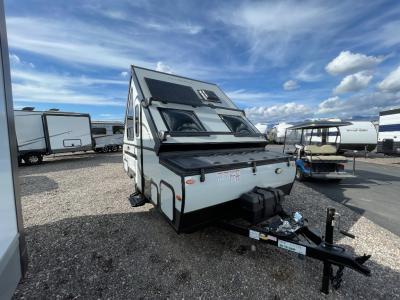
A-frame (hard-sided) pop-ups add solid walls, improved insulation, and better weather protection while retaining low towing height and weight. Many models from makers like A-Liner and Forest River’s Rockwood Hard Side line can be found between $6,500 and $15,000 on the used market.
These units often feature higher countertops, simple lift systems, and some include cassette toilets — making them comfortable for seniors who want quick setup with a sturdier feel than canvas-sided pop-ups.
Lightweight Travel Trailers (16–24 feet)
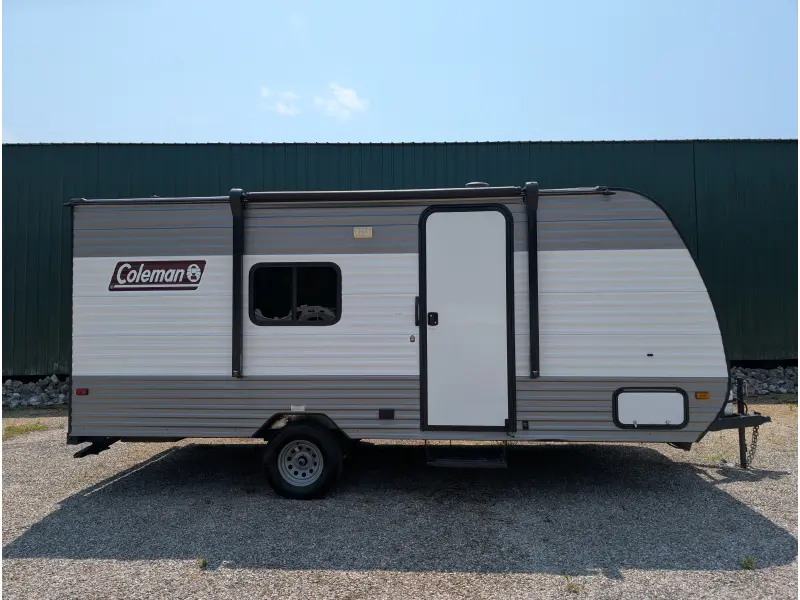
Lightweight travel trailers under $15,000 offer a traditional camper experience: hard walls, fixed interiors, and minimal campsite setup. In this price band, buyers commonly find 2009–2018 models in the 16–24-foot range from manufacturers including Keystone (Hideout, Passport), Coachmen (Clipper, Apex Nano), and Lance (older 1575/1685 variants).
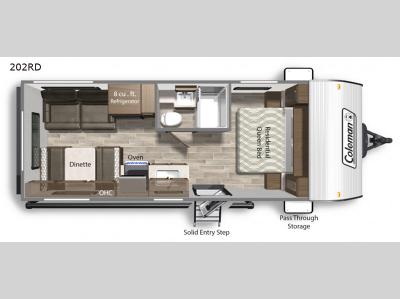
Look for a walk-around bed so both sides are accessible, a rear bedroom layout when possible, and a dry bath instead of a wet bath if longer trips are planned. Typical dry weights land between 2,800 and 4,800 pounds; a properly equipped midsize or half-ton SUV/truck tow vehicle is usually required. If you prefer to avoid converting the dinette nightly, prioritize floorplans with a fixed bed.
Fiberglass “eggs” like older Scamp and Casita trailers sometimes appear just under $15,000; they’re sought-after for light weight and simple maintenance, so act quickly on clean listings.
Teardrop and Micro Trailers
Teardrops are the smallest and lightest options — often 800–1,800 pounds and towable by compact crossovers. Interiors are dedicated sleeping spaces with an exterior galley. For seniors who want simplicity with minimal setup, mid-2010s and newer units from brands such as nuCamp TAG or Little Guy often sell between $6,500 and $12,000.
Know the trade-off: entry usually involves sliding directly into a low sleeping compartment rather than standing and stepping down. If hip or mobility limitations are present, test the doorway size and mattress height on the specific model you’re considering.
Small Class C and Class B — Stretch Targets
For those who prefer not to tow, older small motorized RVs sometimes sneak under $15,000. Early- to mid-2000s Winnebago and Coachmen Class C models (22–26 feet) can appear around $12,000–$18,000 depending on mileage, condition, and service records. Compact Class B campervans such as older Roadtrek 190 or Pleasure-Way models usually exceed $15,000, but higher-mileage examples occasionally list near this mark. Expect more variability and be diligent on mechanical inspections.
Where To Find Used Campers Under $15,000
RV Trader is the most comprehensive dedicated marketplace for used campers and RVs and allows filtering by price ceiling, length, type, and weight. Setting a maximum price of $15,000 and filtering for travel trailers, folding campers, and teardrop trailers surfaces the most relevant inventory efficiently. Price-drop alerts on saved searches are helpful for buyers who aren’t in a rush.
Facebook Marketplace is one of the most active channels for private-party camper sales and consistently surfaces pop-up and lightweight travel trailer listings at competitive prices. Private sellers in this segment are frequently more flexible on price than dealers; searching for specific model names (e.g., “Jayco pop-up,” “Keystone Hideout,” “A-Liner”) returns more relevant results than broad category searches.
Craigslist remains active for private-party camper sales and often shows listings below dealer marketplaces for equivalent units, though it requires more manual searching and vigilance.
Cross-reference listings on RVUSA and RVT to spot units that appear on one platform but not others.
Auction channels including GovPlanet and PublicSurplus occasionally list campers from government fleet disposals or estate settlements — patience is required, but clean, below-market units do appear.
What To Verify Before Committing
Roof and wall condition are the most important inspection items on any used camper. Delamination — where the exterior wall or roof material separates from the underlying structure due to water infiltration — is the most common, most expensive repair issue and warrants careful scrutiny. Run a hand along the exterior walls and roof edges, checking for soft spots, bubbling, or visible separation; use a flashlight inside to look for staining around vents, skylights, windows, and corners.
Inspect seals and seams around windows, doors, vents, and roof edges for cracking or gaps. Review consumer guidance from the RV Industry Association and consider hiring a certified inspector. The National RV Inspectors Association (NRVIA) can help you locate a qualified professional; a pre-purchase inspection often costs $200–$500 and provides a thorough condition assessment.
For trailers, confirm tow-vehicle compatibility — gross vehicle weight rating (GVWR), tongue weight, brake controller needs, and receiver class. For motorized units, verify recent maintenance records (brakes, tires, fluids, roof reseal) and get an independent mechanical inspection.
Price-check intelligently: use J.D. Power (NADA) RV values for book pricing and comparables, and supplement with recent listings via RV Trader’s Price Checker to gauge fair market value in your region.
Smart Budgeting and Ownership Costs
Even at $15,000 and under, budget for initial refresh items: new tires if older than six years, a battery upgrade, sealant touch-ups, and a deep sanitation of water systems. Insurance for a towable is typically modest compared with motorized units; storage fees vary by region. If a unit needs upholstery, awning fabric, or a mattress replacement, factor those into your total cost of ownership.
Don’t overlook weight-distribution hitches, sway control, and quality entry steps/handles — all can significantly improve safety and day-to-day comfort for senior campers and may be worth adding after purchase.
Quick Buying Checklist for 55+ Buyers
- Can you enter the camper in one or two steps with a solid grab handle?
- Is the bed walk-around with access from both sides at a comfortable height?
- Does the bathroom layout (dry vs. wet bath) fit your flexibility and balance needs?
- Is the loaded weight within your tow vehicle’s true capabilities (including gear and water)?
- Are there any signs of leaks, soft spots, or delamination on walls, ceiling, or floor?
- Do all appliances (fridge, furnace, A/C, water heater) function on all intended power sources?
- Have you validated pricing with J.D. Power values and recent comps on RV Trader?
- Did an independent inspector or trusted technician review the unit?
Bottom Line
With a $15,000 ceiling, senior-friendly campers are not only attainable — they’re plentiful if you focus on the right formats (lightweight travel trailers, pop-ups, A-frames, and select teardrops) and prioritize low step-in height, practical layouts, and sound construction. Combine thoughtful feature selection with disciplined inspections and smart marketplace monitoring, and you’ll land a comfortable, confidence-inspiring camper that’s easy to own and a joy to use.
 Used
Used
 Used
Used
 Used
Used
 Used
Used
 Used
Used
 New
New